

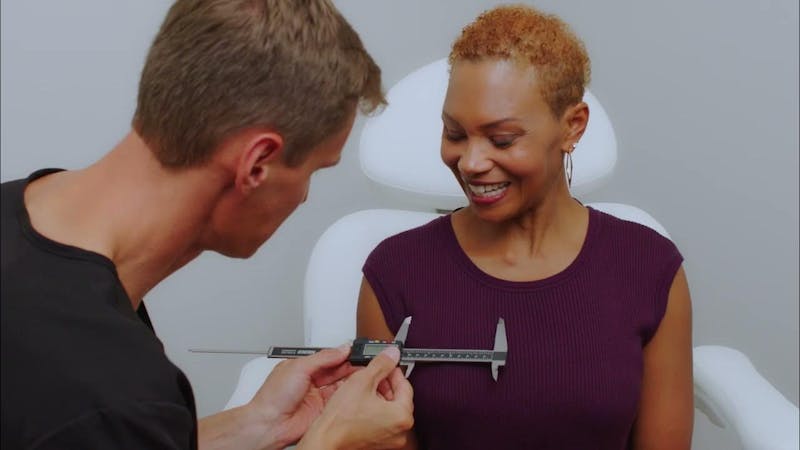
One of the most common questions I get in the consultation room from patients considering breast implant removal is:
"Can you replace my implants with fat during the exact same surgery?"
The clinical reality is that it isn’t always that simple. While transitioning from synthetic implants to your body's own natural tissue (auto-augmentation) through procedures like breast augmentation with fat transfer is an excellent choice for many, the timing of your fat transfer matters just as much as the surgical technique.
If you are planning your explant journey, here is a deeper look at the science of fat grafting and why we might recommend waiting to add volume.
The Capsule Factor: When Immediate Transfer Works
A limited amount of fat transfer is absolutely possible at the exact same time as your implant removal, but typically only if the scar tissue capsule surrounding the implant is preserved and left inside the body.
Because the pocket remains intact, we can strategically graft small amounts of fat into the surrounding breast tissue and muscle to help soften the transition and mask minor contour irregularities.
The Total Capsulectomy Challenge
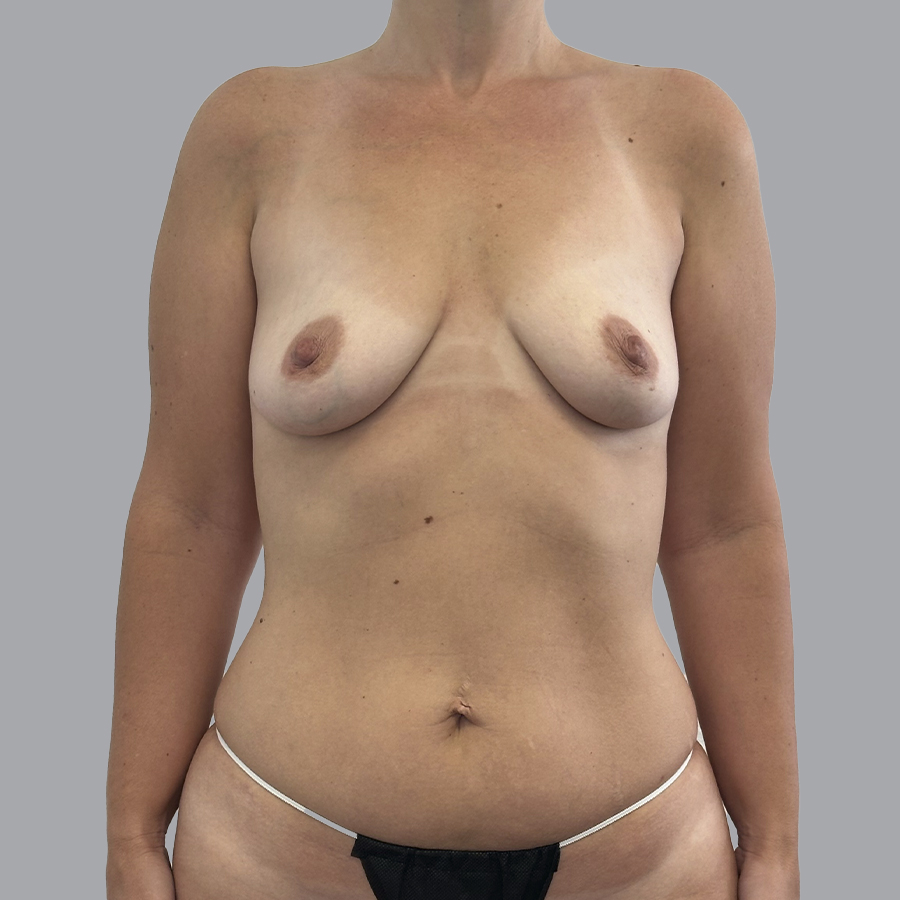
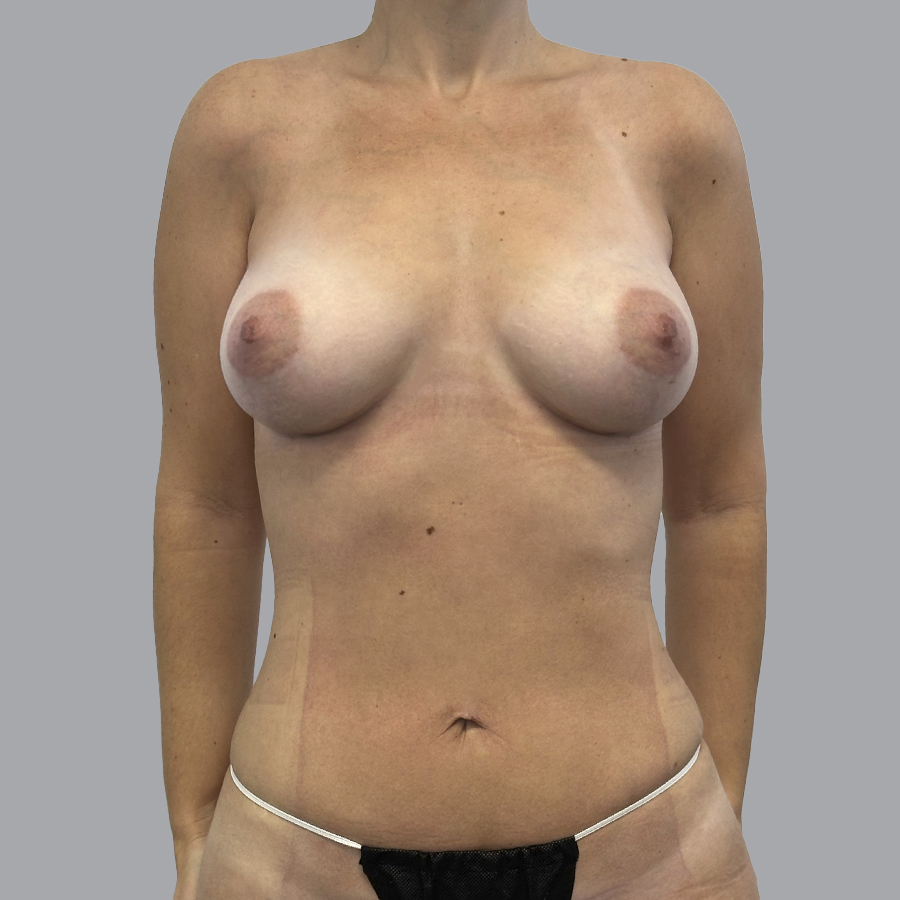
Many patients considering breast implant removal opt for a total capsulectomy—the complete removal of the scar tissue capsule—due to concerns about Breast Implant Illness (BII), capsular contracture, or implant rupture.
If your surgical plan requires a total capsulectomy, immediate fat grafting becomes significantly more difficult. Removing that capsule completely disrupts the structural integrity of the breast and removes one of the primary tissue planes we rely on to safely deposit the fat.
The Science of Fat Survival
To understand why this is a challenge, you have to understand how fat grafting works. We don't just "pour" fat into the breast.
Transferred fat cells are living tissue, and they cannot survive in an empty space. If we simply inject fat into the large, empty cavity left behind by your implant and capsule, those fat cells will be starved of oxygen and die, leading to oil cysts or hard lumps.
To survive the transfer, fat must be meticulously woven in tiny, microscopic streaks into healthy, living, blood-rich tissue. This process, known as vascularization, is what allows the newly transferred fat to establish a blood supply and permanently integrate into your body.
Why We Often Recommend "Staging"
If your goal is to achieve the maximum possible volume and projection from a fat transfer, we frequently recommend staging the procedure. This is a two-step process:
-
Step One: We perform the explant and total capsulectomy, prioritizing the complete removal of the implant and capsule, and then let your body heal.
-
Step Two: Months later, after the empty cavity has collapsed and healed together, we go back in for the fat transfer.
By giving your body time to recover, it re-establishes healthy, thick tissue planes. When you return for the second stage, instead of an empty void, we have a perfectly primed, highly vascularized canvas ready to accept and nourish those small streaks of grafted fat.
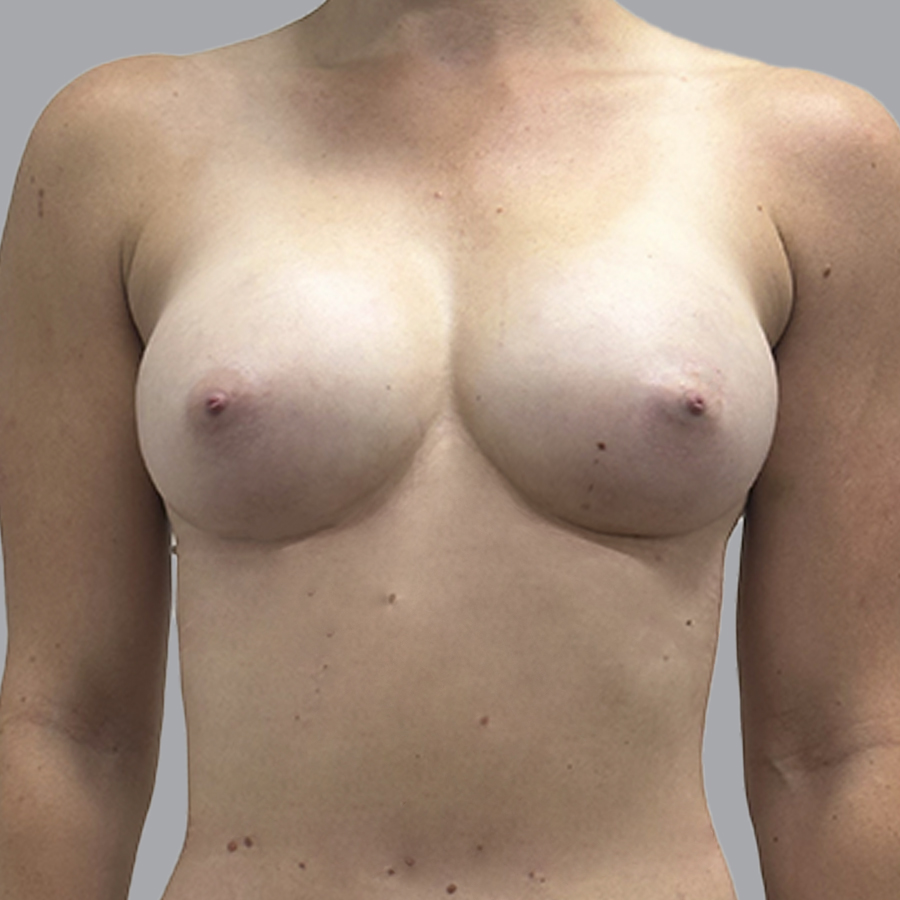
Patience Yields the Best Results
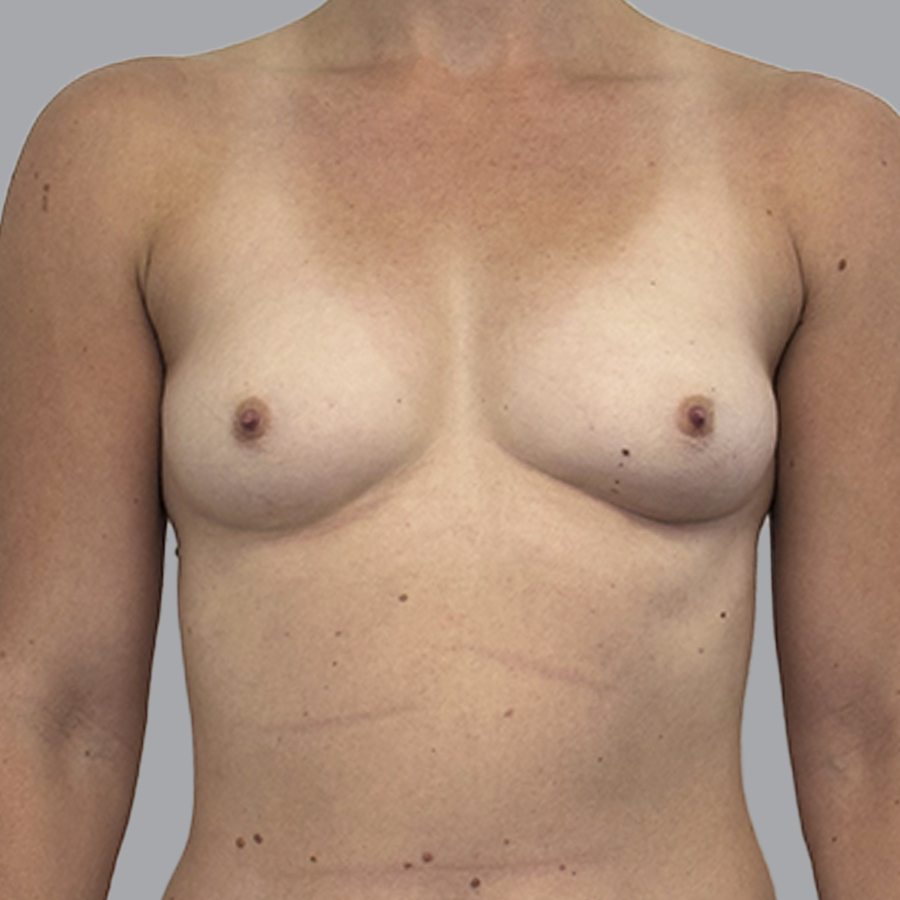
We understand the desire to wake up from a single surgery with your final results, but biology cannot be rushed. Staging your procedures often provides a much higher fat survival rate, a lower risk of complications, and a softer, more beautiful final contour.
Every patient's anatomy and medical history is unique. At our Tampa practice, we thoroughly evaluate your tissue quality and goals during your consultation to determine whether an immediate or staged approach is the safest and most effective route for you.